


Posts on theantiquedjourney.com may contain affiliate links. As an Amazon Associate, I earn on qualifying purchases. You can read the full privacy policy and disclosures here.
Thrifting for Creativity and Mental Wellness: Why I Treat the Hunt as Self-Care
By Rachel
|
Share this post. Share the Journey!
Last Updated on August 27, 2026 by Rachel
Learn the many therapeutic benefits of thrifting! Come see why, and how, secondhand shopping became one of my favorite mental wellness practices for self-care.
Thrifting is one of my favorite weekly pastimes and one of life’s greatest joys. And, over the years, as I’ve continued to thrift and antique shop, I’ve noticed something. That something is how calm and present I feel when taking part in this activity! It feels more like a mindful hobby than shopping. For me, thrifting isn’t just decor sourcing- it’s a wellness ritual, which is possibly why I love and crave it more than ever. In this post, I’ll be talking about thrifting for creativity and mental wellness as well as why I treat the the thrill of the hunt as self-care!
Why I Thrift: A Mindful, Creative Hobby (Not a Consumption Habit)
Just like many of you, I love to thrift. As I’ve stated over and over, the anticipation and thrill of not knowing what could be on a thrift store shelf is what keeps me coming back. But recently, I had the feeling that, for me, there is a little more to it than that.
You see, thrifting isn’t easy. Unlike regular retail store shopping, where the latest trends are curated for you, thrifting takes work, mindful attention, and patience.
And that’s the draw. In today’s society of algorithms, constant technology, social media, endless scrolling and impulse shopping, thrifting is much more analog. It encourages me to slow down, be creative, think for myself, and calms my cortisol.
Today’s post will merge mindfulness, creativity, mental health research, and practical tips for creating your own thrifting mental wellness practice.

So, grab something nice to drink and let’s talk about it!
Shop Favorite Vintage Home Decor

Thrifting for Creativity and Mental Wellness: Why I Treat the Hunt as Self-Care
In my eyes, there is no argument that thrifting enhances one’s quality of life. Shopping secondhand is more than just shopping- it’s a mindful way to get out of the house, slow your roll for a sec, and maybe find some pretty things along the way.
Below are all the reasons why thrifting has become a routine mental wellness ritual in my life!
Why Thrifting Feels Different From Regular Shopping
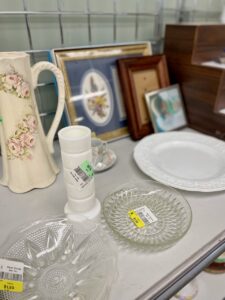
Shopping secondhand at thrift stores and/or antique malls is MUCH different than ‘shopping’. Besides the fact that thrifting is more about the search instead of the grab and go retail shopping mentality, here are some other reasons:
- It Slows You Down- You can’t rush or hurry while thrifting or antiquing…it’s just not possible!
- The Absence of Algorithms and Ads- With thrifting, there aren’t targeted ads, no “recommended for you”- you simply find what you find. Isn’t there such peace in that?! It’s like a breath of fresh air.
- The Mindfulness of the Hunt- There is such instant gratification in the loop of online/retail shopping, which honestly takes the fun out of it. With thrifting, there is no telling what you are going to find on any given day, which is why your mind can’t be anywhere else when thrift shopping!
The Therapeutic Benefits of Thrifting
This is not meant to be clinical because I’m not trained in that realm. However, as I’ve discovered through my own experiences, there are some therapeutic benefits to thrifting that you may not have thought about!
Thrifting as a Mindfulness Practice
- Sensory Grounding- Thrift shopping enables you to be aware and present in the moment using your senses. Hearing what’s going on around you (ambient noises such as hangers sliding, chatter, or creaky floors), feeling textures of fabrics or other finishes, and seeing colors or patterns, without any story attached, is incredibly peaceful.
- “Flow State” Hobby- I liken thrifting to a ‘flow state’ hobby- things you can do where time stands still and the world melts away- such as gardening, puzzles, cooking, painting, or crocheting. These ‘analog’ activities are becoming more and more popular right now and I think that is such a wonderful thing!
- Nothing Else is Competing for Your Attention- Many people naturally put their phones away while browsing. You are essentially single-tasking in a multi-tasking world. For that half hour or hour, you’re doing exactly one thing. Oh, how your brain thanks you for that!
- Gentle Awareness to Really Look- There is a subtle focus required to really look at an item without distraction (ex. checking for craftsmanship, looking for wear, imagining it in your space or how you would use it) keeps one’s mind grounded in the present.
All of these practices are similar to how walking meditation works. It’s movement combined with attention rather than sitting still and I’ve found that to be completely true in my thrifting journey.
What Research Says About Shopping, Novelty, and Mood
Research has found that, when we discover something new such as a great vintage find or an unexpected treasure, our brain releases a small hit of dopamine, which is the feel-good chemical tied to reward and anticipation. This is the same mechanism behind the appeal of ‘the hunt’ in general, whether it’s antiquing, estate sales, or even scrolling social media.
However, not all dopamine hits are equal. There’s a difference between:
- “Mindless” novelty- things like endless scrolling, impulse online shopping, or fast fashion hauls. These tend to give a quick hit followed by little lasting satisfaction (sometimes even regret or clutter guilt).
- “Earned” novelty- the kind you get from thrifting, where the reward comes after effort, patience, and attention. You had to look, touch, consider, and decide. That process itself is calming and grounding, not just the ‘win’ of finding something spectacular at the end.
Why This Matters for Mental Wellness:
Thrifting isn’t just shopping with better branding. It’s actually a healthier version of the reward-seeking behavior we’re all wired for. Instead of avoiding the impulse to seek novelty, thrifting channels it into something slower, more intentional and more physically/mentally engaging.
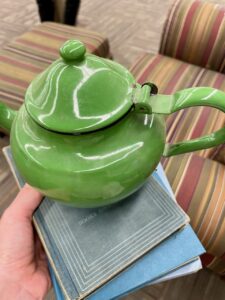
“There’s a reason the thrill of finding a $6 vintage enamelware teapot within piles of old, forgotten things feels amazing- it’s the same novelty-seeking wiring that makes any ‘find’ satisfying. But unlike a five-second online checkout, thrifting makes you work for it- and that effort is part of what makes it feel so good.”
Shop Favorite Vintage Decor
Thrifting as a Creative Outlet
I also love thrifting because of the creativity that I feel when I’m taking part in this hobby of mine!
It turns on the creative part of my brain-the portion that is involved in problem-solving and vision. Thrift shopping for secondhand goods helps me to see potential in items that others walked right past, or envisions an item in my home before even purchasing it. All of those skills are creative muscle-building in action!
The Emotional Rewards of the Thrifting Hunt
Thrifting is also highly emotional. By that I don’t mean sad or anything…it’s the just the overall feeling of knowing that this is exactly where I’m supposed to be at this very moment in time, if that makes sense.
Patience as a Practice
Secondhand shopping for mental wellness also taps into the patience as a practice ideal. This means, as I’ve experienced many times, that not every trip yields a score or a find-and that’s part of the point. Learning to wait for a reward rather than instant gratification is hugely important.
Connection to History and Story
Thrifting also taps into the empathic and sensitive part of my brain.
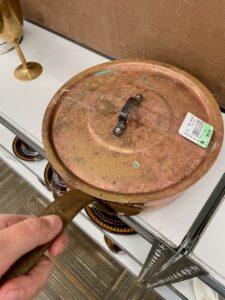
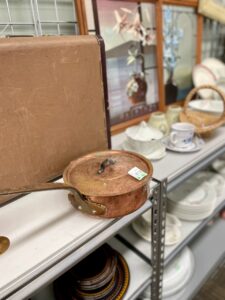
Coming across vintage decor that I love gets me out of my head and into the present. For example, finding an old copper pot at the thrift and feeling the emotional pull of the item with a past life fills me with gratitude. Gratitude for finding it, gratitude for the people before me that prepared meals with it and gratitude that the old thing still exists.
Nostalgia is so comforting and that’s that.
How to Start Treating Thrifting as Self-Care (some practical tips)
Now that I’ve shared how thrifting has had, and continues to have, such a positive impact on my mental health, I want to give you some actionable tips that you can take and try using on your own thrifting journey!
Rachel’s Top Tips for Mental-Wellness When Thrifting:
- Go without a shopping list (unless there are specific things you are looking for, so you don’t forget!) or must-find pressure.
- Don’t go if you are in a hurry. If you have a time limit, go a different day so it stays leisurely, not obligatory.
- Bring a journal or notes app for ideas, not just purchases.
- Go solo! I typically thrift by myself so that I can take my time and be my own best friend. I treat it like a leisurely walk, not an errand or chore to be done.
- Notice the calmness that ensues afterward, not just feeling giddy about what you found.
- Even if it’s going to be a shorter thrifting trip, bring yourself a snack and water. (you’ll thank me later)
- No part of thrifting is serious business. Take off the pressure, let go, and just be.
Closing Tidbits on Thrifting for Creativity and Mental Wellness: Why I Treat the Hunt as Self-Care
With that, this wraps up my thoughts on thrift shopping for mental wellness! I sincerely hope that you were able to pull a few helpful tidbits to bring to your own thrifting life and learned why I treat the hunt as self-care.
The overall message is clear: thrifting is a beloved ritual, not a must-do routine with rules and guidelines.
Thrift shopping has unknowingly changed my life for the better and has played a huge role (amongst many other modalities) in healing from chronic anxiety. So, if you find yourself highly stressed or anxious, I urge you to go to the thrift store. Just walk and see what you see. I promise you’ll walk out feeling calmer and more relaxed.
Be encouraged to slow down and look at all the blessings around you, finding presence along the way.

Leave me a comment! Do you treat thrifting as a self-care practice? I’d love to hear!
Sign up for my FREE Ultimate Thrifting Guide here!
Stuck on how to use vintage decor in a modern home? My e-book walks you through it all!
Follow Along with The Antiqued Journey
Pinterest | Facebook | Instagram | LTK | Amazon | Lowe’s
 PIN it for later!
If you are new here, I’m Rachel, the writer and content creator here at The Antiqued Journey. I’m so happy to have you! I encourage you to stop by the ‘about me’ page to get to know me a little more.
Here on the blog, you will find loads of inspiration for decorating with vintage and antique decor, simple DIY crafts and many thrifting adventures. If that interests you, I invite you to sign up for my e-mail. You will receive a free digital download as a thank you!
Shop My Favorite Thrift Shopping Essentials
FAQ’s on Thrifting for Mental Health
Is thrifting good for mental health?
Yes! Thrifting can support mental health by encouraging mindfulness, slowing down decision-making, and providing a low-pressure creative outlet. The physical act of browsing and searching can also be calming and meditative for many people.
Why is thrifting so satisfying?
Thrifting taps into the same novelty-seeking reward system as any “hunt,” but because it requires patience and effort, the payoff tends to feel more earned and satisfying than instant, impulse-driven shopping.
How is thrifting different from regular shopping psychologically?
Regular retail shopping is often designed around urgency and instant gratification (sales, algorithms, curated recommendations), while thrifting requires slower, self-directed searching — which encourages presence and patience rather than impulse.
Can thrifting help with anxiety or stress?
For many people, yes. The repetitive, tactile nature of sorting through items can have a grounding, almost meditative effect similar to other mindfulness-based hobbies like gardening or puzzles.
What is mindful shopping?
Mindful shopping means being intentional and present during the buying process — considering need, quality, and emotional response to an item rather than shopping on impulse or for a quick dopamine boost.
How do I start thrifting for self-care instead of just decor?
Shift your mindset from “finding something specific” to “enjoying the process.” Go without a strict list, give yourself time to browse without pressure, and pay attention to how the experience makes you feel — not just what you bring home.
Other Posts to Enjoy
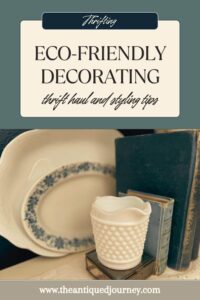
Why Thrifting is the Ultimate of Eco-Friendly Practices
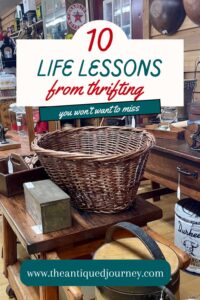
What is Thrifting? 10 Life Lessons from a Decade of Secondhand Shopping
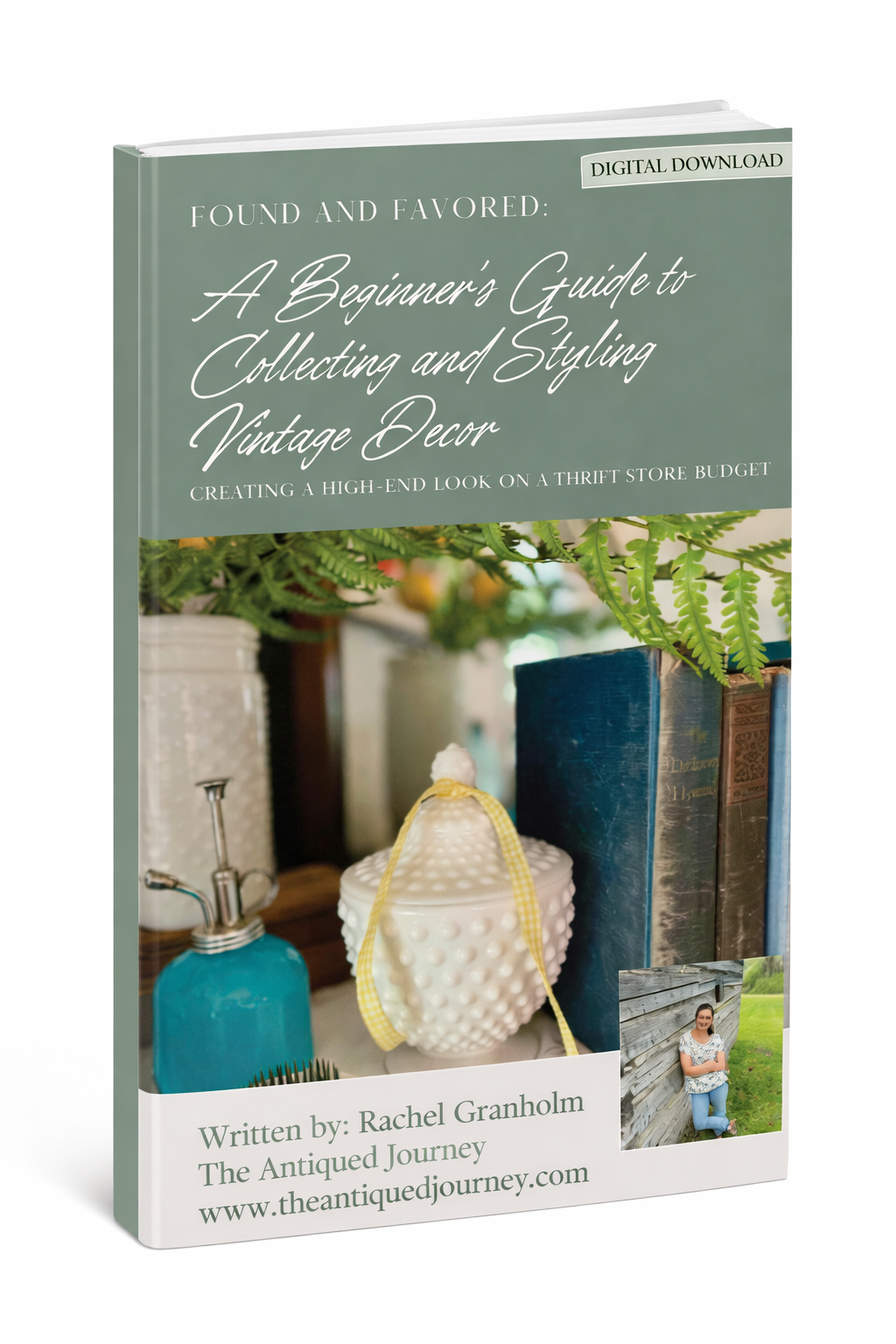
Feeling a little unsure where to start with vintage decor?
I created Found and Favored, a beginner-friendly guide that walks you through what to look for, how to spot quality pieces, and how to style vintage finds with confidence — without overspending or feeling overwhelmed.

Hey! I’m Rachel!
I’m so glad you are here! Old things are my jam. Antique malls and thrift stores are my happy places.
Here on the blog I love to share my excitement, knowledge, and ideas about all things antique, vintage, and thrifted. Let’s journey together!

Want to style vintage decor with confidence?
Get the beginner’s guide that will save you money and help you find real treasures.
Sign me up for the
Journey!
Sign up for free antique and vintage inspiration, DIY projects, and thrifting tips straight to your inbox.


7 Comments. Leave new
Hi Rachel! I totally agree with you; thrifting is great for my mental health! Plus, when we go to the big yard sales or flea markets, we get lots of walking in, too!! Happy thrifting!
Yes! Totally…it gets you out and moving, too!
The walking around and seeing all that each place has and then finding that one piece you have been looking for, forever, is so thrilling!!
Hi, Marlene!
It totally is! That’s the pull, right?! Thanks for coming by today!
As someone who thrifted yesterday for over an hour, by myself, taking my time, looking at everything (and scored a $4.00 Ann Taylor skirt that fits perfectly), I can attest to this article as being spot on. My mental health yesterday was off the charts happy. 🙂
Hi, MaryAnn!!
I LOVE this!! Thank you so much for sharing!! Isn’t it the best feeling when something fits EXACTLY right and it’s just a few dollars?! Can’t beat it. Have a lovely weekend!
Indescribable! ☺️