


Posts on theantiquedjourney.com may contain affiliate links. As an Amazon Associate, I earn on qualifying purchases. You can read the full privacy policy and disclosures here.
Mindful Thrifting: Is Your Secondhand Habit Actually Sustainable?
By Rachel
|
Share this post. Share the Journey!
Last Updated on May 28, 2026 by Rachel
Let’s chat about mindful thrifting and answer the tricky question…is your secondhand habit actually sustainable?
Ah, thrifting- the most glorious thing in all the land. And, I think we’ve all been there…the thrill of a big thrift haul, cart overflowing, and feeling victorious. I know I have! But, is more always better, even secondhand? I’ve been pondering that query lately because I have thoughts about it. So, I want to introduce the concept of mindful thrifting- and when thrift shopping starts to not be sustainable. Yes, I still get the urge to go to the thrift store but it’s different. How I shop secondhand has changed. Join me as I share why this shift happened, learn all about mindful thrifting, and get my take on the question ‘is your secondhand habit actually sustainable?’
The Short Answer
Secondhand shopping is only truly sustainable when it’s done with intention — because overconsumption is overconsumption, regardless of where you shop. Here’s how to thrift more mindfully:
- Buy with a clear purpose — ask “do I have a specific place for this?” before it leaves the store
- Choose one meaningful find over a cart full of impulse buys
- Practice the “one in, one out” rule to keep your home clutter-free
- Donate only gently used, quality items so your goods don’t end up in a landfill anyway
The Rise of the Thrift Haul-and Why It’s Getting Complicated
It’s all over social media these days…influencers sharing their giant thrift hauls. I used to get jealous over all of the cool stuff that they found for so cheap, but I have a different outlook on it now. I still thoroughly enjoy seeing what others are finding out in the wild and am happy for them when they score really good things.
But like, why are they doing this? Why am I doing this? Is it to gain something particular? Is it to buy things just to buy things? Or is it for something else entirely?
It’s just safe to say that this is all a very delicate balancing act and it’s getting complicated.

I’m answering all that and more below so grab something nice to drink and let’s talk about it.
The Real Cost of the Haul Culture
I recently started thinking about my thrift hauls that I share monthly here in the Thrifted Goodies series. Reflecting on what I’ve shared on hauls and methods and thrifting tips in general, am I practicing what I preach?
Like, when does secondhand shopping not equal sustainable?
Here are some thoughts on this notion that I’ve had recently:
- Overconsumption is overconsumption, regardless of where you shop.
- The irony of bulk thrift buying is that you are still spending money and purchasing goods, which, if you’re not carefully choosing what you buy secondhand and buying with intention, those things are going to end up in a landfill, too. That totally contradicts the environmental and sustainable aspect of thrifting!
- Since thrift shopping has become so popular in recent years, I’m noticing rising thrift store prices. This means reduced access for lower-income shoppers who rely on these goods to live on a daily basis. Where are they supposed to shop if they can’t even afford to buy from thrift stores?! That seems so backwards.
- There is a pattern, or cycle, to over-thrift shopping: thrifting too much leads to donating back, or throwing away, low-quality items. That’s a real oxymoron!
Mindful Thrifting: Is Your Secondhand Habit Actually Sustainable?
Let’s get into the heart of the post. I told you at the beginning that I would share my thoughts on mindful thrifting-what it means and how to go about practicing it. So, here we go!
What Does ‘Mindful Thrifting’ Actually Mean?
This term is new to me, so it’s probably new to you, too. Let me break it down in simple terms.
In essence, mindful thrifting is the intentional practice of shopping secondhand with purpose-it’s having a clear sense of what you truly need. Like, rather than filling a cart simply because prices are low, mindful thrifting means slowing down. It’s about asking yourself whether a piece actually serves a space in your life or home before it leaves the store. It’s about choosing quality over quantity, curating over collecting, and recognizing that even thrift shopping can become overconsumption. Mindful thrifting transforms a thrifting trip into a thoughtful and sustainable act that serves a purpose.
Curation Over Collecting
The first thing we need to discuss when it comes to mindfully thrifting is the notion of curating over collecting.
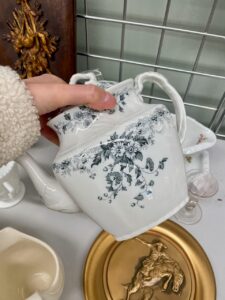
For years, I’ve told people that I collect things…milk glass, art, ironstone…what have you. And, I do. However, I’ve always been one to thrift with intention. So, really, instead of ‘collecting’, which to me means just buying anything without thinking about it first, I’m actually carefully curating my home, one piece at a time.
Like, when I go to the thrift store, I don’t set out to see how much I can buy. I set out to see if there is anything specific at the thrift store that will add joy, or serve a purpose, in my mindfully curated home. Maybe a unique piece of milk glass for under $10 that I don’t yet have. Or a piece of vintage floral art that can be used in multiple rooms.
You see, I don’t buy just to buy. Every single thing I bring home from the thrift store serves a function. There is a huge difference between that and just shopping out of habit or boredom. The latter will find you buying un-needed and un-necessary things.

The difference between a thrift haul and a curated find:
A haul is defined by quantity. It’s the thrill-seeking of the hunt- cart after cart, bag after bag…the satisfaction measured by how much you brought home rather than what you brought home. Haul culture, especially on social media, has unfortunately turned thrift shopping into a sport of volume-where the prize is a pile of low-priced, low-quality items that may never be used or loved.
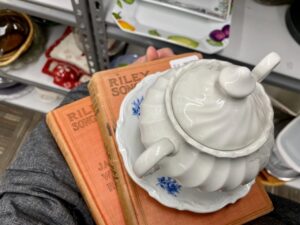
On the other hand, a find is defined by meaning. It’s that one single piece that stopped you in your tracks- a crazed ironstone pitcher, an antique mirror with the perfect chippy frame, or the vintage linen that you’ve been on the look out for. A find has a story and a reason. In my eyes, you don’t just stumble upon it because you were browsing everything-you saw it because you knew exactly what you were looking for in the first place.
A haul fills a space. A find fills a need. See the difference?

Quality Markers Worth Looking For
Two things that I do when thrifting, to ensure that I’m being mindful of what I’m buying, are:
- to check for durable construction of the piece (like that the material is naturally occurring, not synthetic)
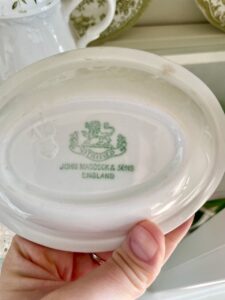
- and check for any maker’s marks. Any maker’s marks will help you to know for sure that the item is quality and genuine, not a cheap reproduction.
I’ve relied on these tips for many years and, even though they are simple, have helped me curate beautiful, quality pieces for my home!
The ‘One In, One Out’ Mindset
This is a method of daily living that I’ve practiced for over ten years.
Basically, if I find or buy anything ‘new’ from the thrift store…it could be a piece of home decor, clothing, a household good, etc…then when I get home, I have to find something else to donate.
This is an an extremely practical way to keep my home curated and clutter-free, which is the whole point of mindful thrifting!
Before You Buy: How to Avoid Impulse Buying at Thrift Stores
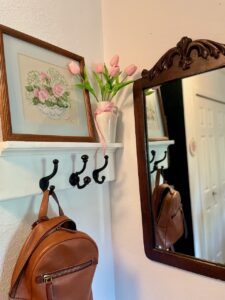
Okay. Now. This part might be hard for you and that’s okay. But. I wholeheartedly believe that if you ask yourself these questions while thrifting (and be honest!), it will save so much time and energy later on. Your future self will thank you.
These questions exist for one reason — to interrupt the impulse.
Here are a handful of questions that I always ask myself when I find an item at the thrift store:
- Do I have a specific place or purpose for this?
- Does it reflect my style or just feel like a good deal?
- Would I buy this if it weren’t so cheap?
- Am I buying it out of intention or impulse?
- Is it versatile? Can this be used in multiple ways or placed in different rooms?
- Will I still love this in six months?
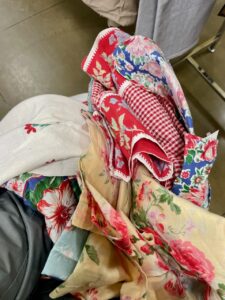
The Art of Donating Wisely
Okay. Now, let’s switch gears and chat about mindfully donating to thrift stores or charity shops. Because, there is more to it than meets the eye.
Why Bad Donations Hurt More Than You Think
I love donating un-needed or un-used goods to my local thrift store. I’m always happy to give them more inventory, that someone else will be able to use, that they can then sell for charity.
Most of us donate with good intentions. We bag up what we no longer want or need, drop it off at the thrift store, and feel good about keeping it out of the landfill. However, when donating, it’s so important to think about the quality of your items. Damaged or unusable donations actually create more work and more waste for thrift stores.
Basically, what thrift stores need and what they actually receive are two very different things, which leads me to the my next point.
What Thrift Stores Actually Need
- Gently used, clean clothes (not stained, holy, or pilled)
- Quality housewares (sturdy un-chipped dishes, glassware, and cookware)
- Solid wood furniture
- Working small appliances with all the parts
- Books, puzzles, and games (complete without missing pieces or torn bits)
- Linens and textiles (clean and that still have life in them)
- Seasonal and holiday decor (gently used)
What Thrift Stores Actually Receive
- Broken, stained, or heavily worn items
- Fast fashion items that have already reached the end of their life
- Incomplete sets (games missing parts, etc…)
- Furniture that is not structurally sound or is damaged
- Outdated electronics
How to Donate With Intention
As you can see, a good portion of what gets donated never even makes it to the sales floor. Thrift stores pay to sort, process, and dispose of un-useable donations, which means your well-meant bag of old items can actually cost the charitable organization money rather than support it. Some estimates say that up to 25% of donated goods end up in landfills, which completely defeats the purpose!
Here are some ideals to keep in mind:
- Donate items in good, usable condition only.
- Before loading everything into the car, research local organizations that accept specific items. This will save everyone a ton of headache.
- Consider alternatives such as ‘Buy Nothing’ groups, list your large furniture or vintage pieces on Facebook Marketplace, or look up textile recycling in your area.
- Contact your local homeless shelters to see if they could use anything.
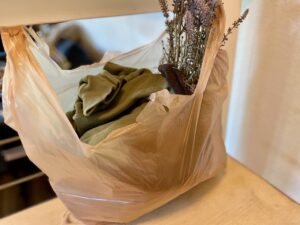
Creating a Home You Love, One Intentional Find at a Time
With mindful thrifting, the whole goal is to shift from more to meaningful. Because, truly, slowing down and being intentional actually leads to a more beautiful, cohesive, and cozy home over time.
Just recently, mindful thrifting has transformed not only how I think about thrift shopping, but how I decorate my home, as well.
I’m still going to be sharing my thrift hauls on a monthly basis, but instead of thinking ‘I have to go thrifting so that I have enough items to share in my haul!’, I’m changing my mindset to ‘Let’s go see if I can find anything to mindfully add to my curated decor. If I don’t find anything today, that’s okay!’
I’m taking the pressure off and letting things unfold how they will without my need to control it all. It’s really a much more peaceful and simple way of thrifting, decorating, and, frankly, living.

Closing Tidbits on Mindful Thrifting: Is Your Secondhand Habit Actually Sustainable?
I want you to understand that this isn’t about guilt, it’s about growth. When we know better, we do better!
Mindful thrifting is still joyful thrifting, just with more intention rather than being willy nilly. On your next thrifting run, I urge you to try one small thrift shift, either one that I’ve shared here or something else. You can do it! I’ll be here cheering you on.
Be encouraged to live thoughtfully, finding ease along the way.

Leave me a comment. Does mindful thrifting resonate with you? I love hearing from you!
Go here for more thrifting content!
Follow Along with The Antiqued Journey
Pinterest | Facebook | Instagram | LTK | Amazon | Lowe’s
 PIN it for later!
If you are new here, I’m Rachel, the writer and content creator here at The Antiqued Journey. I’m so happy to have you! I encourage you to stop by the ‘about me’ page to get to know me a little more.
Here on the blog, you will find loads of inspiration for decorating with vintage and antique decor, simple DIY crafts and many thrifting adventures. If that interests you, I invite you to sign up for my e-mail. You will receive a free digital download as a thank you!
Shop My Favorite Thrift Shopping Essentials

Frequently Asked Questions About Mindful Thrifting
What is mindful thrifting and how is it different from regular thrift shopping?
Mindful thrifting is the intentional practice of shopping secondhand with a clear purpose — focusing on quality, need, and meaning rather than volume and price. Regular thrift shopping, especially haul-style, is often driven by the thrill of low prices and sheer quantity. Mindful thrifting slows that process down and asks you to be deliberate about every single item you bring home.
Is thrifting actually sustainable, or is it just another form of overconsumption?
Thrifting can be sustainable, but it isn’t automatically so. When done mindfully — buying less, choosing quality pieces with longevity, and donating wisely — secondhand shopping is genuinely one of the most eco-friendly ways to consume. However, bulk thrift hauls can mirror the overconsumption patterns of fast fashion, defeating much of the environmental benefit.
How do I know if I’m thrifting mindfully or just impulse buying secondhand?
A good gut check is asking yourself a few honest questions before purchasing: Do I have a specific place for this? Would I buy it if it weren’t so cheap? Does it reflect my style or just feel like a deal? If you can’t answer those confidently, it’s likely an impulse buy — even at thrift store prices.
What items should I avoid donating to thrift stores?
Avoid donating anything stained, broken, heavily worn, or incomplete. This includes fast fashion at the end of its lifespan, furniture with structural damage, appliances that don’t work, and puzzles or games with missing pieces. These items rarely make it to the sales floor and can actually cost thrift organizations money to process and dispose of.
How do I start thrifting with more intention if I’m used to haul-style shopping?
Start small. On your next thrift run, bring a short list of one to three specific items you’re genuinely looking for. Give yourself permission to leave empty-handed if those items aren’t there. Over time this retrains the instinct to buy simply because something is cheap, and replaces it with the far more satisfying feeling of finding exactly what you were looking for.
Other Posts to Enjoy
5 Essential Habits for Antique Shopping
Decluttering Tips for Collectors
Feeling a little unsure where to start with vintage decor?
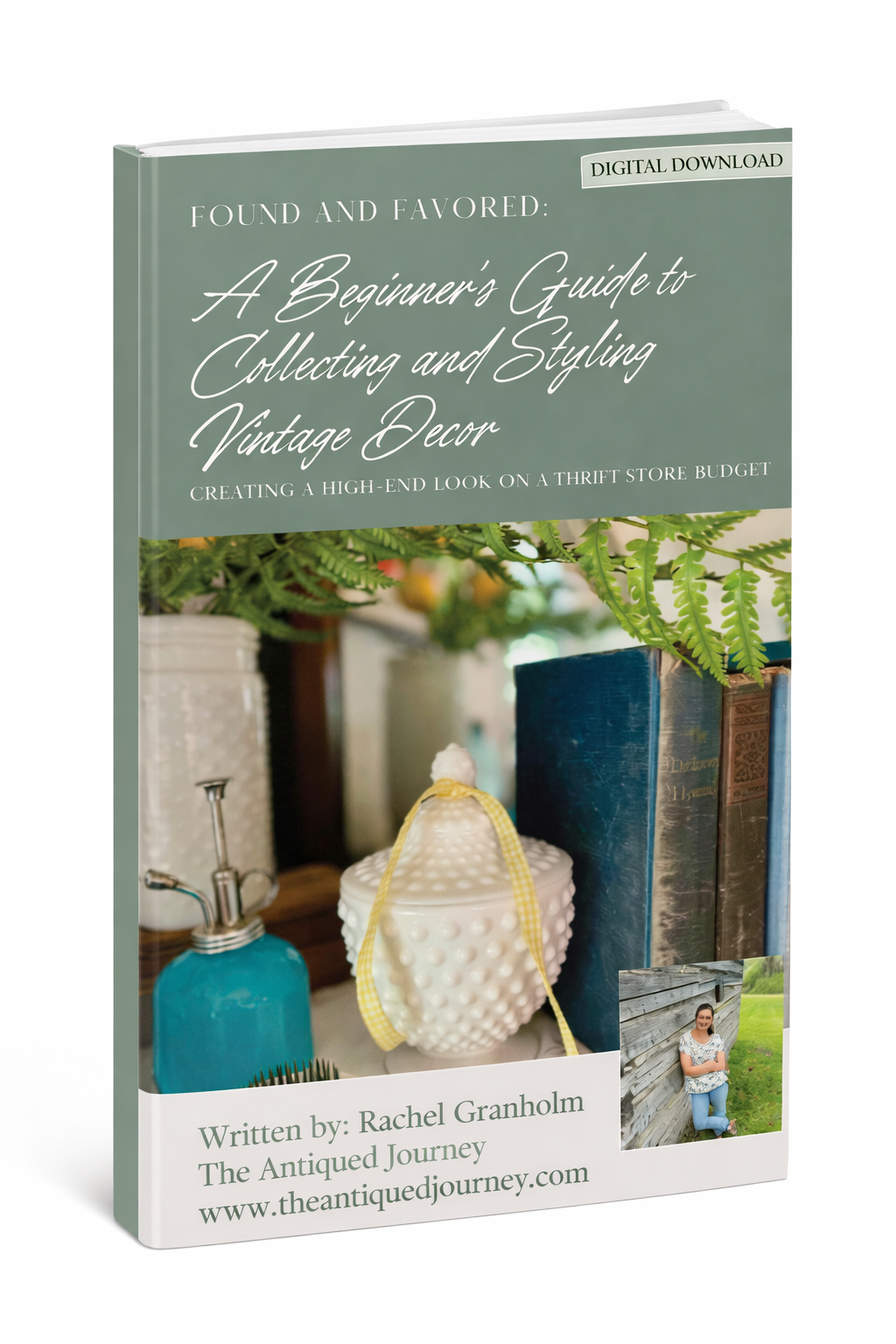
I created Found and Favored, a beginner-friendly guide that walks you through what to look for, how to spot quality pieces, and how to style vintage finds with confidence — without overspending or feeling overwhelmed.

Hey! I’m Rachel!
I’m so glad you are here! Old things are my jam. Antique malls and thrift stores are my happy places.
Here on the blog I love to share my excitement, knowledge, and ideas about all things antique, vintage, and thrifted. Let’s journey together!

Want to style vintage decor with confidence?
Get the beginner’s guide that will save you money and help you find real treasures.
Sign me up for the
Journey!
Sign up for free antique and vintage inspiration, DIY projects, and thrifting tips straight to your inbox.


4 Comments. Leave new
Thanks for sharing your thoughts on this important topic, Rachel! Sometimes it’s hard to pass up such a great deal, but you’ve given me a lot to think about, and I’m going to be more mindful when I’m out shopping next time! Happy thrifting!
Hello!
Thanks so much! Happy you enjoyed it!
I agree completely, before I retired I bought so much but didn’t realise it till I retired and had to rethink the over abundance I had. Now I actually only thrift when I truly want it to go with a display I’m arranging, so much better.
Hey, Marlene!
Isn’t it crazy?! I love that you thrift like this, too. Thanks so much for reading today…truly appreciate it!