


Posts on theantiquedjourney.com may contain affiliate links. As an Amazon Associate, I earn on qualifying purchases. You can read the full privacy policy and disclosures here.
Decorating with Vintage Enamelware: 7 Creative Ideas for Every Room
By Rachel
|
Share this post. Share the Journey!
Last Updated on March 24, 2026 by Rachel
Versatile, colorful, and simple, these 7 creative ideas for decorating with vintage enamelware brings vibrant charm to your home!
If there’s one vintage item I will never stop hunting for, it’s enamelware. There is something about that bold, glossy color- the chips, the patina, the weight of it in your hands- that just feels like home. Enamelware has a way of making any space feel more lived-in and more intentional. And the best part? It’s one of the most functional vintage collectibles out there. You’re not just putting it on a shelf to look pretty. You can actually use it! In this post, I’m sharing everything you need to know about decorating with vintage enamelware — from how to identify a true vintage piece to where to find them, how to care for them, and seven creative ways to style them in your home. Whether you already have a collection or you’ve been eyeing that blue speckled coffeepot at your local thrift store and wondering what to do with it, this post is for you. Let’s dig in!
The Short Answer
Vintage enamelware is one of the most versatile and charming items you can decorate with — think using teapots and pitchers as vases, hanging enamel cups on kitchen hooks, filling a tray or basket with a collection, potting plants in large bowls for porch displays, or tucking small cups into bathroom shelves for pretty storage. It pairs beautifully with vintage linens, copper, ironstone, and old books, and works across every season with just a simple swap of what’s inside. The key is letting the color and patina do the talking — enamelware is bold enough to anchor a display all on its own.
What Is Enamelware?
Enamelware is prized cookware that started in Germany in the 1760’s. It is a beloved item to collect because it is practical, functional, and charming.
Enamelware became popular in the 19th century when manufacturers started to coat pots and pans with lighter steel enamel rather than cast iron. You will find that it is typically white on the inside and colored on the outside.

How to Identify Vintage Enamelware: What to Look For
If you’re just starting out collecting, knowing how to spot a genuine piece versus a modern reproduction can save you from overpaying, or from passing up a real treasure.
Popular Enamelware
Some of the more popular pieces of enamelware include coffeepots, mugs and ladles. Enamelware comes in solid colors like blue or green but you can also find it in a marbled pattern or solid with a colored rim. In some cases you will see floral patterns or pictures on the outside.
Weight and Heft
The single most reliable indicator of age is weight. Pieces from the beginning of the 20th century weigh much more because they were coated in heavier steel or even cast iron, making it noticeably heavier than those made after World War 2. If you pick up a piece and it feels surprisingly substantial, that’s a great sign!
Steer clear of lightweight, thin ones because they are more likely to be new or reproductions.
The Tap Test
The sound of the metal can also give you a clue.
If you tap the bottom of an enamelware piece with your finger or knuckle and it sounds deep and solid, this suggests an older piece. A thin, tinny sound means it was probably produced around the 1970’s and beyond when manufacturers began using thinner metal to cut costs.
Maker’s Marks and Country of Origin
Flip the piece over and look for stamps on the bottom. Many vintage enamelware pieces were made in Europe — particularly Poland, Czechoslovakia, Germany, and Sweden — and will have a country of origin stamp.
These stamps can help you date a piece, since “Made in Czechoslovakia” for example indicates the piece was made before 1993 when the country split.
Wear Patterns
Authentic vintage pieces will show wear that is consistent with actual use over many decades such as small chips along the rim where pieces knocked together, slight discoloration on the inside from years of use, and fading that is uneven and natural-looking.
Reproduction pieces tend to look too uniform and perfect, or have artificially distressed details that don’t quite match how genuine aging looks.
How to Clean and Care for Vintage Enamelware
One of the best things about enamelware is how easy it is to care for, but there are a few things worth knowing to keep your pieces looking their best for years to come.
For everyday cleaning, warm soapy water and a soft cloth or sponge is really all you need. The enamel surface is smooth and non-porous, which means it doesn’t hold onto grime. A gentle wipe-down after use is usually sufficient.
Please avoid anything that is too abrasive. Steel wool, rough scrubbing pads, and harsh chemical cleaners can scratch and dull the enamel surface over time, taking away the glossy finish that makes vintage pieces so appealing. Once the surface is scratched, it’s very difficult to restore.
For stains or discoloration on the inside of pots and bowls, especially that yellowing that happens over time, fill the piece with warm water and add a few tablespoons of baking soda. Let it soak for a few hours or overnight, then gently scrub with a soft cloth. This works well and is gentle enough not to cause damage.
For pieces with rust spots around chips or along the rim, a paste made from baking soda and a little water applied with a soft toothbrush can help lift surface rust without scratching. If a piece has significant rust or deep chips in the enamel, I personally retire it to display-only status rather than using it for food or cooking.
Shop the Look!

Where to Find Vintage Enamelware
This old metal can be found at thrift shops, estate sales, and vintage stores as well as online sources such as Etsy.
I will say that enamelware has become fairly popular in recent years. As such, it is getting harder to find and prices have slowly crept up. However, I do find most of my enamel pieces from thrift shops.
You can still find enamelware at vintage shops for reasonable prices…you just have to do some digging 🙂

Decorating with Vintage Enamelware: 7 Creative Ideas for Every Room
These old metal pieces are treasures to behold because of the many uses they have. Here are 7 easy ways to use enamelware in your home!
1. Enamel Teapots and Pitchers as Vases
One of my absolute favorite ways to use vintage enamelware is as a vase.
Old enamel teapots and pitchers have the most gorgeous silhouettes — round, generous, and full of personality. When you fill them with fresh flowers, faux stems, or even a bundle of dried eucalyptus, they become an instant focal point on a table, counter, or shelf.
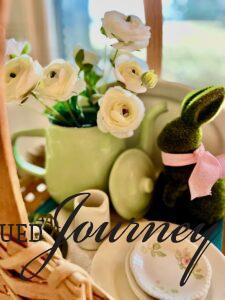
I love using a mint green enamel teapot with tulips or ranunculus for spring, and then swapping in dried lavender or olive branches for a more neutral, year-round look. The color of the enamelware itself does a lot of the work — you don’t need a fancy arrangement to make it look intentional.
Try this on a kitchen counter, a bathroom shelf, a mantel, or even a dining table as a centerpiece. It’s one of those styling tricks that looks far more expensive than it is.
2. Enamelware as Kitchen Decor
The kitchen is the most natural home for enamelware and there are so many ways to work it in beyond just stacking pieces on a shelf.
One of my favorite looks is hanging a row of small enamel cups on hooks near the kitchen. It’s functional, it’s charming, and it creates a display that feels very intentional without requiring much effort. Mix colors for a playful look or stick to one color family for something more cohesive.
You can also prop a large enamel coffeepot on an open shelf alongside other vintage kitchen pieces like ironstone, old tins, or vintage canisters. The combination of textures and finishes creates a layered, collected-over-time feel that no big box store display can replicate. If you have open shelving in your kitchen, enamelware is one of the best things you can style on it.

3. Enamelware Basket or Tray Display
Using a larger piece of enamelware — like a tray, a wide bowl, or a basin — as the base of a vignette is such an underrated styling trick.
Line an enamel tray with a vintage linen or tea towel, then layer in smaller pieces — a few old books, a small jar with stems, a candle. The enamel tray acts as a frame, containing the display and giving it a sense of purpose. It’s one of the easiest ways to create a cohesive vignette on a coffee table, kitchen island, or entryway console.
You can also use a large enamel bowl or basket-style piece as a bread bowl for a party or holiday table — fill it with rolls, fruit, or even pinecones for a seasonal display. It’s functional and beautiful at the same time, which is exactly what vintage decorating is all about.

4. Displaying A Collection of Enamelware Together
If you’ve been collecting for a while and have multiple pieces, displaying them together as a collection is one of the most impactful things you can do.
Group pieces by color for a more graphic, intentional look, or mix colors and let the shared material, that glossy enamel finish, tie everything together. Either approach works. I like to vary the heights by stacking books underneath certain pieces or placing taller items like coffeepots next to shorter mugs and creamers.
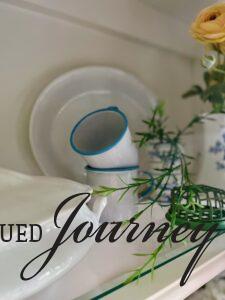
To add softness and texture to the display, tuck in a few stems of faux eucalyptus or olive branches in or around the pieces. A vintage linen draped underneath the collection adds another layer of warmth. Collections of enamelware look especially stunning in a hutch or on open kitchen shelving where they can really be seen and appreciated.

5. Enamelware as Outdoor and Porch Decor
This is one of the most fun and unexpected ways to use enamelware. It’s so lovely for a front porch or back patio display!
Large enamel bowls, pitchers, or even old wash basins make wonderful planters. Line the inside with landscape fabric for drainage and pot a fern, trailing ivy, or simple seasonal flowers directly into the piece. The pop of enamel color against green plants is so pretty and gives a porch a charming, cottage-garden feel.
You can also use enamelware as part of a seasonal porch vignette — think a large enamel pitcher filled with sunflowers for summer, or a deep blue enamel bowl nestled into a porch display with pumpkins and gourds for fall. Because enamelware is durable and weather-resistant, it holds up beautifully outdoors.

6. Enamelware as Functional Kitchen Staples
One of the things I love most about enamelware is that you don’t have to choose between using it and displaying it — you can do both at the same time!
A large enamel kettle on the stovetop is both a working kitchen tool and a beautiful piece of decor. Enamel pots are wonderful for soups, stews, and yes… cowboy coffee. An enamel colander sitting on a counter or hanging from a hook is charming and practical. Even a simple enamel mug used daily for your morning coffee is a small joy that connects you to a slower, simpler way of life.
This is the beauty of collecting vintage enamelware over purely decorative items — every single piece has a story and a purpose. If you’re going to invest in a collection, you might as well enjoy it every single day!
7. Enamelware as Simple Storage
Small enamel cups, containers, and canisters are absolutely perfect for storage and they make the most charming organizational tools in any room of the house.
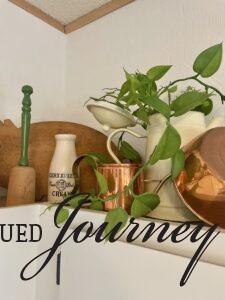
In a bathroom, use a small handled enamel cup to hold cotton swabs, hair clips, or makeup brushes. On a desk, a small enamel container corrals pens and pencils beautifully. In a kitchen, a row of enamel canisters can hold coffee, tea, sugar, or flour while looking completely lovely on the counter.
The great thing about using enamelware for storage is that the organizational function justifies having it out on display. It’s both useful and beautiful, which is the sweet spot of vintage decorating. Look for pieces with lids for pantry storage or lidless cups and mugs for open display storage.

Closing Tidbits on Decorating with Vintage Enamelware: 7 Creative Ideas for Every Room
I hope this post has given you a fresh appreciation for just how versatile and charming vintage enamelware really is. Whether you’ve been collecting for years or you just picked up your very first piece at a thrift store, there is truly no wrong way to use it.
So, the next time you’re out thrifting or wandering through an antique mall and you spot that blue speckled coffeepot or that little green pitcher tucked in the back of a shelf, pick it up. Turn it over. Feel the weight of it. Chances are it has been waiting a long time for someone to bring it home and give it a new life — and that someone might just be you.
Enamelware is timeless and will add joy and beauty to your home in whichever way you choose to use it.

Leave me a comment! What is your favorite type of enamelware and how do you display it in your home? I love hearing from you!
Follow Along with The Antiqued Journey
Pinterest | Facebook | Instagram | LTK | Amazon

Just click the red button in the left corner!

If you are new here, I’m Rachel, the writer and content creator here at The Antiqued Journey. I’m so happy to have you! I encourage you to stop by the ‘about me’ page to get to know me a little more.
Here on the blog, you will find loads of inspiration for decorating with vintage and antique decor, simple DIY crafts and many thrifting adventures. If that interests you, I invite you to sign up for my e-mail. You will receive a free digital download as a thank you!
FAQ: Vintage Enamelware
Is vintage enamelware safe to use for food and cooking?
Generally, yes, vintage enamelware is safe to use as long as the enamel coating is fully intact. If the enamel is chipped, cracked, or showing exposed metal underneath, I would retire that piece to display only. Chips can harbor bacteria and the exposed metal beneath can leach into food over time. For pieces in good condition, enamelware is a wonderful, non-reactive surface for cooking and serving.
How do you clean vintage enamelware?
For everyday cleaning, warm soapy water and a soft cloth is all you need. Avoid abrasive scrubbers or steel wool, which can scratch and dull the enamel surface. For stubborn stains or discoloration on the inside of pots, a soak in warm water with a little baking soda works great. For pieces you’re using purely as decor, a gentle wipe-down is all that’s needed to keep them looking their best.
How do you tell vintage enamelware from a reproduction?
Beyond weight and the sound test I mentioned earlier, look for small imperfections that come with age — uneven enamel application, slight color variations, and wear patterns that are consistent with actual use. Reproduction pieces tend to look too perfect and uniform. Vintage pieces often have maker’s marks or country of origin stamps on the bottom, which can help date them. European pieces, particularly those made in Poland, Czechoslovakia, or Germany, are often the oldest and most collectible.
What colors of vintage enamelware are most collectible?
Blue and white is the most classic and widely collected combination, followed by red and white, and green. Speckled or graniteware patterns, where the enamel has a mottled, stone-like appearance, are particularly sought after and can be harder to find. Solid colors with a contrasting rim are also very popular. Rarer colors like yellow or pink tend to be harder to find and often command higher prices.
How do you style enamelware with other vintage pieces?
Enamelware plays extremely well with other vintage collectibles. I love pairing it with ironstone for a farmhouse kitchen look, with copper for warmth and contrast, with vintage linens for softness, and with old books for a layered shelf display. The key is to let one material lead. If your enamelware is bold in color, keep the surrounding pieces more neutral so the enamel can shine.
Can enamelware be used outdoors?
Yes! Enamelware is quite durable and handles outdoor conditions well, especially for seasonal displays. I would bring pieces inside during extreme cold or harsh weather to prevent cracking, but for a porch display or summer table setting, enamelware is a wonderful choice.
Other Posts to Enjoy

3 Ways to Decorate with Vintage Books


Feeling a little unsure where to start with vintage decor?
I created Found and Favored, a beginner-friendly guide that walks you through what to look for, how to spot quality pieces, and how to style vintage finds with confidence — without overspending or feeling overwhelmed.

Hey! I’m Rachel!
I’m so glad you are here! Old things are my jam. Antique malls and thrift stores are my happy places.
Here on the blog I love to share my excitement, knowledge, and ideas about all things antique, vintage, and thrifted. Let’s journey together!

Want to style vintage decor with confidence?
Get the beginner’s guide that will save you money and help you find real treasures.
Sign me up for the
Journey!
Sign up for free antique and vintage inspiration, DIY projects, and thrifting tips straight to your inbox.


41 Comments. Leave new
Hi Rachel,
We live on a small farm in an 1870’s house, or so they say, I think it’s older. I have a few enamelware pitchers. One of the smaller ones, I hold my “egg money” that I get when selling my chickens eggs. The larger one I love to use as a vase. Just love them, they’re so charming.
Hi Cindy!
Thank you for your lovely comment today…they are charming! What a dream to live in a house like that!! My dream is own a property with a barn and an old farmhouse.
Great ideas, Rachel! Love reading your blog💜💗👏🏻
Thank you!!!
Hey Girl! Love this post! Clearly you have excellent taste. Thank you for sharing. Pinned.
I TOTALLY forgot I even wrote this and then was laughing because I was freaking out over yours this morning 🙂 Haahahaha!!
[…] this case, I used a tall blue jar on the right and a vintage white enamel coffeepot on the left. The greenery stems were already in the pot because I had this displayed in my kitchen, […]
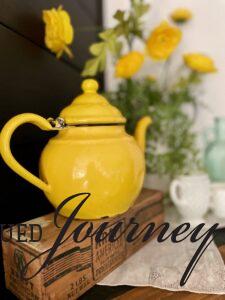
[…] something different and for a pop of color, I used my vintage yellow enamel teapot. It’s bright and sunny at the ocean so yellow is a natural […]
[…] have it styled in my Summer hutch along with my enamelware collection and various other vintage […]
[…] copper collection as the overarching theme but then pepper in coordinating vintage items such as enamelware, old tins and milk […]
[…] incorporated some of my favorite vintage pieces such as copper, enamelware, and Ironstone. To tie it all in with the rest of the house, I used a bottle brush tree as well as […]
[…] This floral enamel dish is just adorable. I love how it seamlessly blends with the rest of my enamelware. […]
[…] for decorating with nostalgic Summer items such as galvanized metal, flower frogs, milk glass, vintage enamelware and rusty tins. Join me as I transform my hutch from Spring to Summer and find simple ways of using […]
[…] whites are always a good idea, especially if vintage enamelware and milk glass can be used. The white color pairs beautifully with my brass candlesticks that I […]
I can’t believe how much your collection has grown, Rachel! I love all your mugs and pitchers and I’m super excited about the trays you found too. The’re really hard to find down here so they’re definitely a keeper! Hugs, CoCo
Thank you!! Yes…it’s getting harder and harder to find for a decent price, so when I see a piece that I don’t have for a fair price, I scoop it up!
Great post Rachel. I love enamelware, but like you said it is harder to find. XO- MJ
Thanks!!
I love the Campfire marshmallow container…such a cute find!
Thanks so much!! That was my MIL’s..she so kindly gave it to me 🙂
You have a great collection of enamelware and I loved seeing how you use it in your home! I rarely see it around here! Happy collecting!
Thank you! Yes..it is getting harder and harder to find, especially for a decent price.
[…] On Tuesday, I shared a post all about collecting and decorating with vintage enamelware. […]
[…] Decorating with Vintage Enamelware […]
[…] Enamel is another popular material for bread boxes, offering the most antique aesthetic. These are made from thin metal and usually have a decorative print on the front. Other materials for bread boxes include plastic, stainless steel, and ceramic. […]
[…] fireworks and time at the lake are all things that come to mind when thinking about using enamelware during the summer […]
Hi Rachel, I have several large enamel pans (I believe they were normally used as wash basins). I don’t know what to do with them. I really don’t want to use them as planters, but that is the only ideas that I come across. Do you have any suggestions?
Hi, Sue!
Thanks so much for the comment!
If you want to use them for decorating purposes, granted I’m not sure how big they are, but I always like to stack a collection of something like that. Like, you can stack them up together, and then in the top one, you could either place a potted plant or create a small vignette with a linen, pitcher or jar, or any other various smaller pieces of decor that you may have.
A more practical option would be to use one to hold shoes in an entry way or closet, or you could also place rolled up towels or hand towels in a bathroom..either place on a countertop or on a stool or something.
Hope that helps!!
Thanks so much again for coming by…have a lovely day!
I use mine next to my bathtub sitting on a large round lacey doily, and filled with rolled up towels. It reminds me of simpler times…..
Love that idea!!
[…] I placed this one underneath my enamel […]
[…] vintage decor and hankies into vignettes helps to establish soft […]
[…] had this vintage enamel tray for years and have used it for so many things. For fall, I turned it upside down, placed it on […]
[…] you can see below, this small snippet in my hutch has both vintage ironstone and enamelware paired with vintage glass […]
[…] Vintage brass comes in many heights and styles, from tall candlesticks to low votive holders. Try pairing brass with wood or enamelware. […]
[…] you can mix with just about anything! I created this simple display for Christmas mixed with some enamelware and various other vintage […]
[…] a straightforward answer for this. I just go by what I love (ie. milk glass, vintage jars, enamelware, etc…) and tweak it to fit the Summer […]
[…] an example, enamelware, which was the first mass-produced kitchenware, is a vintage style that started in the 1870’s. […]
[…] Zdroj: Theantiquedjourney […]
[…] out some chic enamelware ideas if you need inspo! Let’s display them or actually use them, because why […]
[…] the hanky inside my hutch for the season, alongside a handful of other vintage finds including enamelware, blue and white china, and some […]