


Posts on theantiquedjourney.com may contain affiliate links. As an Amazon Associate, I earn on qualifying purchases. You can read the full privacy policy and disclosures here.
Decluttering Tips for Collectors: Let Go Without the Landfill
By Rachel
|
Share this post. Share the Journey!
Declutter your vintage collections the soulful way- no trash can required!
If you’re a collector, the word ‘decluttering’ probably makes you cringe a little. Well, maybe a lot. Because, for those of us who have spent years hunting antique malls and thrift stores, our collections aren’t just ‘stuff’-they’re stories, memories, and a lifetime of carefully trained eyes spotting the beauty where others walked right past.
However, there comes a time when the shelves start to overflow and we have to let some things go because, let’s face it… we can’t keep all the things. As someone who has been navigating the balance between a love for collecting and living minimally, I want to share a more thoughtful, responsible approach to editing collections-one that honors both the pieces themselves and the planet. These decluttering tips for collectors are for anyone who has ever said “but I just can’t throw it away!” You’re in the right place.
Decluttering Your Home Without the Guilt: Sustainable Tips for Vintage Decor Lovers
The thing about letting go of beloved vintage pieces is that it doesn’t have to mean the landfill! And, I’ve learned over the years that decluttering doesn’t have to feel like a betrayal of everything you love, either.
The tips I’m sharing today are written specifically for collectors and the sentimental souls.
Yes, letting go of collected pieces is hard, sometimes even gut-wrenching. But, with a few mindful ways of looking at it, you’ll be able to happily set those things free, without the guilt!

Come along as I spill all my thoughts on how to let go of collected vintage items the mindful way.
Shop Organizational and Display Supplies

Decluttering Tips for Collectors: Let Go Without the Landfill
So, how to go about doing all of this without tears?? Let’s talk about it.
Why Letting Go Feels Different for Collectors
Before diving into any practical advice, I want to validate the emotional experience that comes along with decluttering collections. I want you to know what I feel you and see you and I’m not judging you, or anyone, for having ‘too much stuff’. It’s truly an emotional thing-one that many others just won’t understand or grasp-but I’m here to hold your hand every step of the way.
The Emotional Weight of a Curated Collection
Collectors, myself included, don’t accumulate randomly.
Every piece was chosen intentionally, often with a story attached. And this very thing is what makes decluttering feel so personal and why standard decluttering advice can feel tone-deaf to people like us with a vintage collection(s).
Why the ‘Just Throw it Out’ Advice Doesn’t Work for Us
It can be super frustrating when others try to give us generic decluttering advice that ignores the value of our items! These antique and vintage collections are sentimental, historical, and sometimes monetary. It’s like a punch in the gut when someone says ‘just throw it away!’ That truly makes me want to cry.
So, below, I want to propose a better solution and a much more soulful approach-a better way forward, if you will.
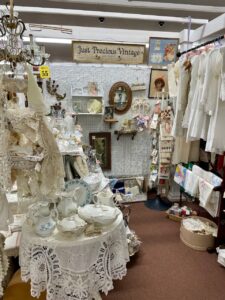
The Collector’s Mindset Shift
First of all, I want to help us reframe how we think about letting go. This subtle shift can be the first step to a world of decluttering possibilities!
From ‘Getting Rid of’ to ‘Finding It a Worthy Home’
Instead of ‘getting rid of’, try thinking of decluttering as an act of stewardship rather than loss, instead. When a piece moves on to someone who will truly love and use it, that’s not letting go — that’s giving it a second chapter. The item will get to live on in a new home with someone who will truly cherish it.
Asking the Right Questions Before You Let Something Go
To help you decide what stays on what moves on, here are some guiding questions.
Ask yourself things like (and be honest):
- Does this still bring me joy or has it become visual noise?
- Is it displayed and loved or boxed up and forgotten in a closet?
- Would someone else treasure this more than I do right now?
- Does this have a spot in my home right this very minute?
- Would I miss it if it were gone?

Shop Vintage-Friendly Cleaning Supplies
Where to Re-Home Vintage and Antique Items Responsibly
In this section, we’re getting into the specific, actionable places and methods for letting go without contributing to landfill waste. I’ve grouped the tips together into manageable sections so that you can snap a photo of the ideas with your phone if needed!
Donating to the Right Places (not just any thrift store)
I hate to say this but not all donation locations are equal. Before you donate any cherished item(s) to a thrift store, think again. There may be much better places for your pieces!
Other options to consider include:
- local historical societies
- theater costume departments
- libraries
- schools
- churches
- Habitat for Humanity Restores for furniture
- specialty thrift stores, like consignment shops, that focus on specific categories
My advice here would be to give any of these local places a call, or send an e-mail, describing the thing(s) that you have and if it would be useful or helpful for them.
In essence, think about where a piece will be most appreciated!
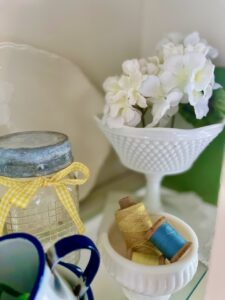
Selling on Resale Platforms
Another option is to sell your pieces. If your items are especially valuable, this is a great method to try and you will get some cash back in the process, which is a huge bonus. But, don’t just sell them anywhere or to anyone!
In my opinion, the best platforms for selling vintage and antique items responsibly include:
- Facebook Marketplace
- eBay
- Mercari
- local buy/sell groups
Selling items ensures the item goes to someone who actively wants it. Purging items in this way hurts a little less because you know that it’s going to a good, loving home.
Gifting Within Your Community
Sometimes, the best home for a beloved piece is closer than you think!
Another mindful and caring way to let go of your stuff is by offering items to friends, family, neighbors, or local collector communities and/or groups.
I do this often. If I am not using say, a table linen anymore, I try and think of a family member or friend who might like it or would be able to use it more than me. Offering your collected item(s) for free or gifting them to a loved one is extra special and makes letting it go much easier!
Decluttering Tips for Specific Types of Collections
In this section, I’m giving you advice on how to part with, and declutter, specific kinds of collections.
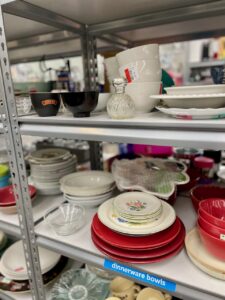
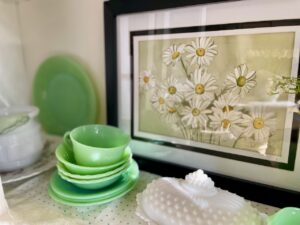
China, Glassware, and Kitchenware
For this category, I would try selling your pieces, especially china or glassware sets, at a consignment store or on places such as e-Bay or Facebook Marketplace first. If you want these specific pieces to go to a buyer who collects your certain pattern or brand, I think e-Bay would be your best bet.
Before pricing, research the item(s) that you intend to sell. You’ll want to list them for a fair, market-value price. Any collector will be more than willing to pay that.
Textiles, Linens, and Quilts
Since vintage textiles are usually one-of-a-kind and sometimes quite fragile, I would first point you towards specialty buyers such as quilting guilds, textile museums, or historical societies who may welcome donations of antique linens and quilts.
The next best thing after that option would be to try Facebook Marketplace, especially for quilts. People and collectors alike are always looking for old quilts! Again, try and research ‘like’ products online so that you can get a fair price for your item(s).
Books, Art, and Paper Ephemera
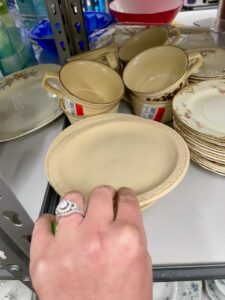
Before you assume that your old books (or art) don’t hold any value, I highly suggest you do a little research. You might be surprised at how much other collectors are willing to pay for items such as yours! Try listing them for market price on e-Bay or Mercari.
For letting go of books, art, and other paper ephemera, here are some good places to check in with:
- used bookstores
- little free libraries
- local art groups
- schools
- ephemera collector communities online
Furniture and Larger Pieces
You may have some large pieces and/or antique furniture that you are ready to part with. The tricky thing about large items is that they are well, large, and difficult to be moved. My advice here is to make it easy on yourself and sell, or donate, to those who are willing to come and pick it up!
For selling or donating larger items, try:
- Facebook Marketplace (in the listing state that the buyer will need to move it themselves)
- local antique dealers who may buy on consignment
- Habitat for Humanity ReStores
- community free groups or ‘buy nothing’ groups
- local community or high school theater programs
How to Declutter in Stages Without the Overwhelm
For collectors like us, the idea of tackling everything at once can be paralyzing. I want to give you permission to go slowly. Taking your time makes sustainable decluttering feel manageable!
The “One Collection at a Time” Approach
I highly encourage you to focus on a single category or collection rather than the whole house. By being thorough and finishing one area at a time, it creates momentum and confidence without the burnout that comes from trying to do it all at once.
Seasonal Editing as a Sustainable Habit
If you are new to this concept, I want to introduce the idea (and something I personally do on a regular basis) of a gentle seasonal review, perhaps once or twice a year, where you assess what is still serving you and what has become clutter.
This keeps things from building up and makes letting go feel like a natural, low-pressure rhythm rather than a big dramatic overhaul.
Think of it like going to the dentist every six months. If you go regularly, your teeth will be kept healthy, clean, and without build up. Same thing with the purging of collections!
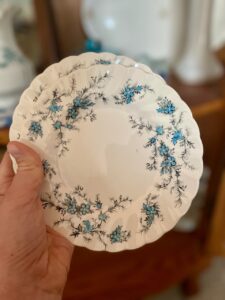
Keeping the Pieces that Truly Belong
Before I close, I want to remind you that this process is very positive and exciting!
Please remember that this isn’t about stripping your home bare. It’s about making room for the things you truly love to shine by letting go of the extra.
Curating vs. Collecting (Understanding the Difference)
Let’s gently unpack this for a second because these are two completely different things.
A curated collection is intentional and evolving, while unchecked collecting can quietly become clutter.
Instead of mindlessly collecting, try curating pieces. This looks like, instead of buying every single thing, purchasing one intentional piece that can serve as a statement decor staple all year round!
At the end of the day, the act of editing or pairing down your collection actually elevates and honors the pieces that do remain. What’s left are the pieces that truly speak to your soul. When it comes to vintage and antiques, that’s everything.
Displaying What Stays with Intention
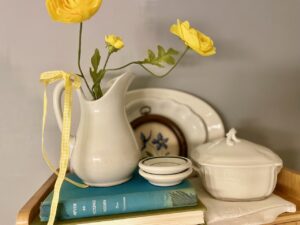
Finally, I want to encourage you to be intentional about how the keepers are displayed. When vintage pieces are thoughtfully arranged and given space to breathe, a collection feels like a story rather than an accumulation.
After letting go of decor pieces, don’t pack the shelf full again. A fair amount of empty space is a very good thing.
A Gentle Challenge
As we part, I want to invite you to pick just ONE item from your home or a collection this week to rehome responsibly. It can be anything…any one thing that you aren’t using, isn’t adding value to your life, or is just otherwise in the way and causing clutter.
I’ll be honest with you here and let you know that just last week, I donated a two bags of clothing to the local thrift store. Though it wasn’t anything related to my vintage collections, I still adhere to my rule of ‘one thing in, one thing out’. Meaning, if I thrift anything, I have to get rid of something else in my house.
After you do, let me know how it went. I’ll be cheering you on!
Closing Tidbits on Decluttering Tips for Collectors: Let Go Without the Landfill
Letting go of beloved pieces is anything but easy. You aren’t alone in finding this hard. But, I want to remind you that decluttering as a collector isn’t about loving things less- it’s about making more room for the things you love most.
Be encouraged to thoughtfully fill your home with only what truly belongs, having the courage to let go of what’s no longer serving along the way.

Leave me a comment! How do you declutter items in your home? What’s one piece you’ve been holding onto that might be ready for a new home? I love hearing from you!
Now that you know how to let go responsibly, here’s how to declutter your home mindfully and embrace vintage decor for a tidy space.
Follow Along with The Antiqued Journey
Pinterest | Facebook | Instagram | LTK | Amazon | Lowe’s

If you are new here, I’m Rachel, the writer and content creator here at The Antiqued Journey. I’m so happy to have you! I encourage you to stop by the ‘about me’ page to get to know me a little more.
Here on the blog, you will find loads of inspiration for decorating with vintage and antique decor, simple DIY crafts and many thrifting adventures. If that interests you, I invite you to sign up for my e-mail. You will receive a free digital download as a thank you!
FAQ’s for Decluttering Collections
What should I do with vintage items that are damaged or broken? Before assuming something is trash, consider whether any parts are salvageable — hardware, knobs, hinges, or decorative elements can often be repurposed. For items truly beyond repair, look into local recycling programs that accept specific materials like glass, metal, or wood.
Are thrift stores the best place to donate antique and vintage items? Not always! While thrift stores are a convenient option, specialty destinations like historical societies, theater groups, antique dealers, or Habitat for Humanity ReStores may be a better fit depending on the item. The goal is to find a home where the piece will be genuinely appreciated and used.
How do I know if my vintage items are worth selling rather than donating? A quick search on eBay or Etsy for similar items can give you a ballpark idea of value. If something is a known maker, a specific pattern, or in excellent condition it may be worth listing before donating. When in doubt, a local antique dealer can often give you a quick informal opinion.
Can I be a collector and still live clutter-free? Absolutely! The key is shifting from collecting to curating. When every piece in your home is intentionally chosen, thoughtfully displayed, and genuinely loved, a collection adds beauty rather than chaos. Decluttering regularly actually elevates the pieces that remain and gives them the space they deserve to shine.
Shop My Favorite Thrift Shopping Essentials
Other Thrifty Posts to Enjoy
Decorating Tips from a Collector
Minimalist Decor for a Vintage Spring Home
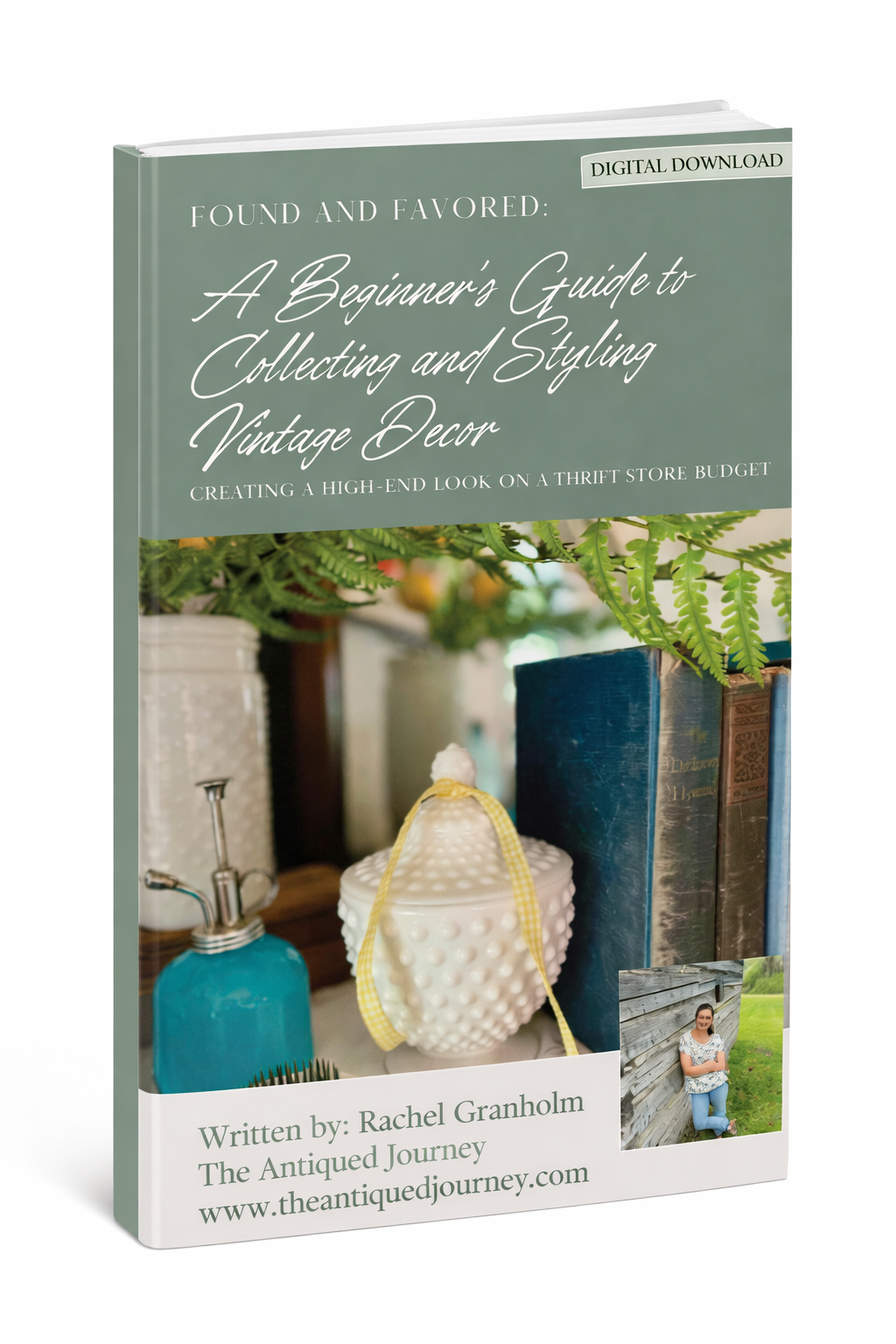
Feeling a little unsure where to start with vintage decor?
I created Found and Favored, a beginner-friendly guide that walks you through what to look for, how to spot quality pieces, and how to style vintage finds with confidence — without overspending or feeling overwhelmed.

Hey! I’m Rachel!
I’m so glad you are here! Old things are my jam. Antique malls and thrift stores are my happy places.
Here on the blog I love to share my excitement, knowledge, and ideas about all things antique, vintage, and thrifted. Let’s journey together!

Want to style vintage decor with confidence?
Get the beginner’s guide that will save you money and help you find real treasures.
Sign me up for the
Journey!
Sign up for free antique and vintage inspiration, DIY projects, and thrifting tips straight to your inbox.


4 Comments. Leave new
Love this Rachel!! I agree 💯 and love all your tips. I can totally relate. Great post friend. XO- MJ
Hi! Thanks, friend! Appreciate it!
Great advice!!! Can totally relate to it all.
thank you!!